
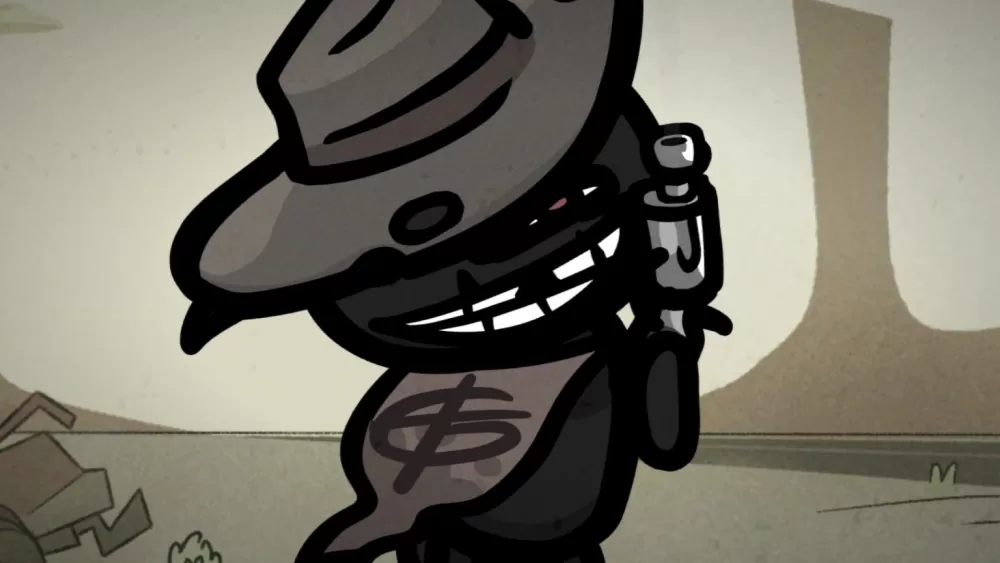
I understand most of turn-based roguelike Mewgenics, beyond perhaps its central theme: the Mewgenics part. You’re meant to mould generations of felines into an army of abominable meowtants over the course of increasingly difficult DnD-esque campaigns. And like a furry pal lounging on my lap and sinking its claws into my thighs, I’m addicted to an experience I can’t quite comprehend.
How do I breed the ultimate army? Not a clue, pal. I can barely track who’s who in my shag pad teeming with veterans, schmucks and innocent strays. When the time comes to conscript four poor souls, not a single cell fires in my brain. And it’s this excess and overwhelm that both drives my obsession with Mewgenics and my persistent frustrations with it.
Developed by Tyler Glaiel and Edmund McMillen of The Binding of Isaac and Super Meatboy fame, Mewgenics’ roguelike setup sees you take four cats on a ‘run’, with a run comprised of ever-escalating battles and unhinged random encounters until you hit the boss. The goal is to obliterate the big bad and make a decision: return home with your winnings, unlocks, and your levelled up cats, or keep ploughing on a see if your kittys can conquer increasingly difficult areas. It’s a simple premise for newcomers and will be incredibly familiar to those who’ve liked their rogues over the years.
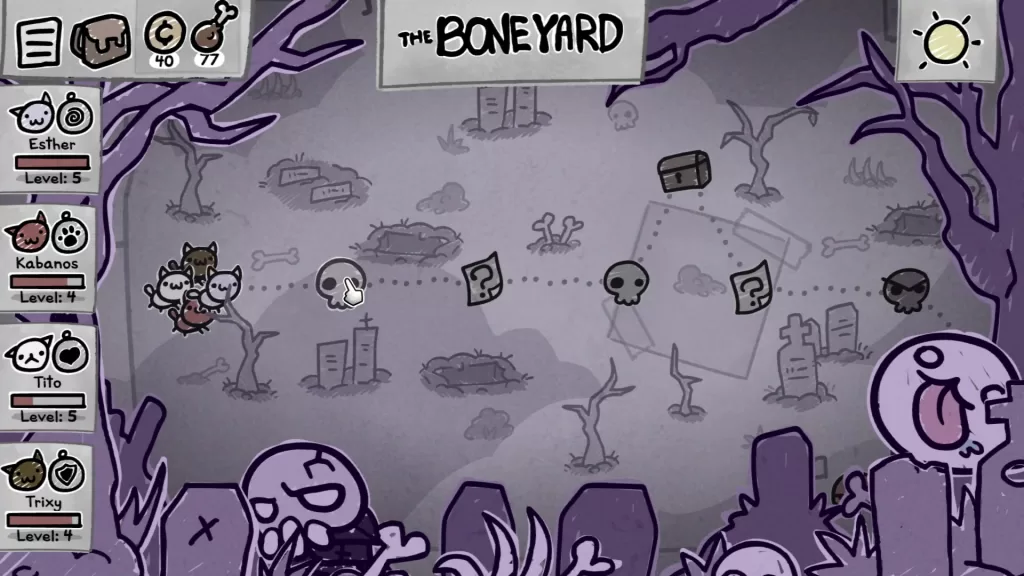
Return home with a gang of battered winners and they’ll immediately enter retirement with a house arrest order and a crown thrust upon their heads. If all your big kitty’s get killed in the city, you keep a few pity morsels of your choice. But let’s pretend you’ve won, for the sake of my sanity as I try and break down how housing works… or what I understand of it, at the very least.
Home is where the hub is, and it’s filled with all your little gremlins who grow older as time passes. Each run counts as a lovely day out, with booty like money, food, and items all whizzing into your storage. Food is the equivalent of rent here, as more cats mean more mouths to feed as day turns to night. A sequence of bad runs? You’ll keep only a fraction of what you stocked up on those runs, but you’ll have fewer mouths to feed and, mercifully, less chance of starvation. Good runs? You’ll have enough Whiskas and moola to last you several decades.
As days and runs go by, strays rock up at your doorstep, oldies pass, and some will batter each other to death. Mewgenics allows you to deposit the inevitable excess into its cleverly thought-out bin system, where you send unwanted cats to the city’s weird residents who pine after felines of a certain flavour. Fulfil their kinks, and they’ll reward you with permanent upgrades to your hub, like extra storage space and new rooms.
A glitzier purr pad means, in theory, a greater chance at deeper runs. And to kick off those runs you’ll pick four pals, stick Class collars on them, then outfit them with weapons and garb that confer benefits big and small and unsightly. When all is locked in, you roll out.
To roll out is to tumble onto the equivalent of a jazzy chessboard and then quickly analyse what’s what. A gaggle of one-eyed ruffians on one side of the board and your fellas at the bottom; alright. Glance top right and you’ll see what the turn order is; okay. Have a quick hover over the enemy, “Runs away when attacked”; useful. Then it’s a case of fairly typical turn-based battling, where one turn encompasses a movement action, a basic attack, and a spell if you’ve got the juice in your carton.
No, the game isn’t doing anything particularly differently from your XCOMs or your other tactical roguelikes and that’s okay with me. As someone whose brain often can’t compute the complexities of turn-based strategy, or grows frustrated at their slower pacing, I’m fond of Mewgenics’ readability during even the messiest of fights.
As runs go deeper and the chaos increases, scraps rarely feel like they relinquish fun for the sake of complexity. Invest smartly in active abilities (spells that use mana) that play off your passives (general traits) and your ragtag crew can morph into a super team capable of surviving the RNG blender. Hey, they might even thrive in it.
Take my Tank for instance, who was rendered “scatalogical” after he ate some poop in a random encounter outside of combat. This meant he’d automatically move to anything poop-adjacent and gobble it up instantly. Partaking of the brown sauce meant he’d heal, too, but it also meant he’d put himself in danger to sate his hunger. For a while, I underestimated him, until he consumed a huge poop boss and his crap cronies in only a few satisfying snaps of his jaw. That’s my Scat Lord.
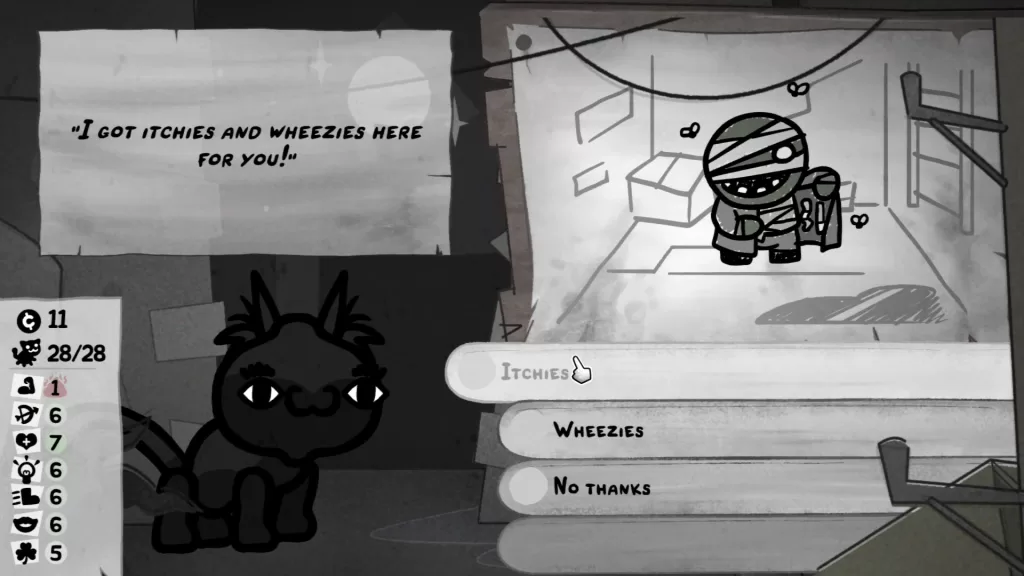
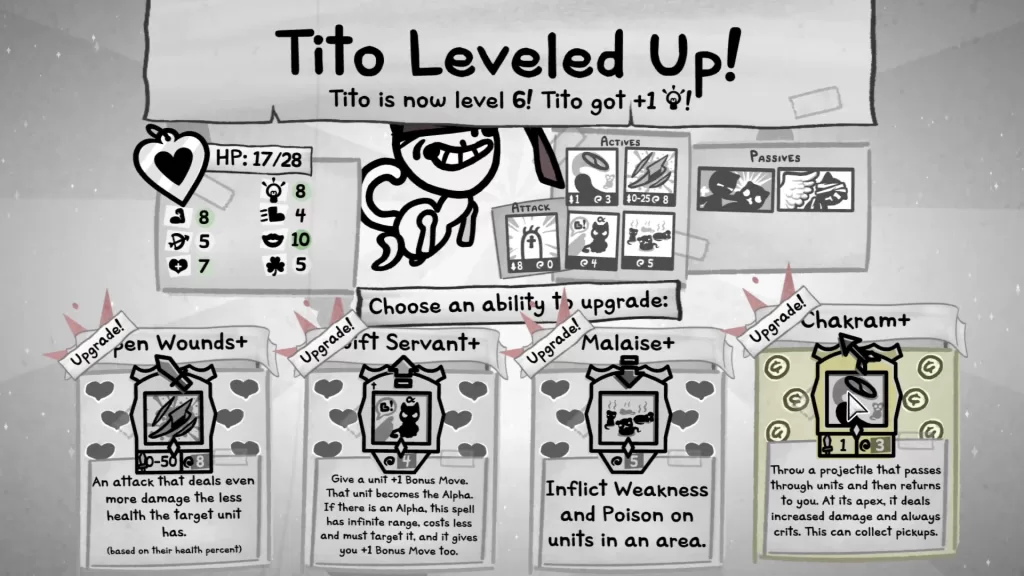
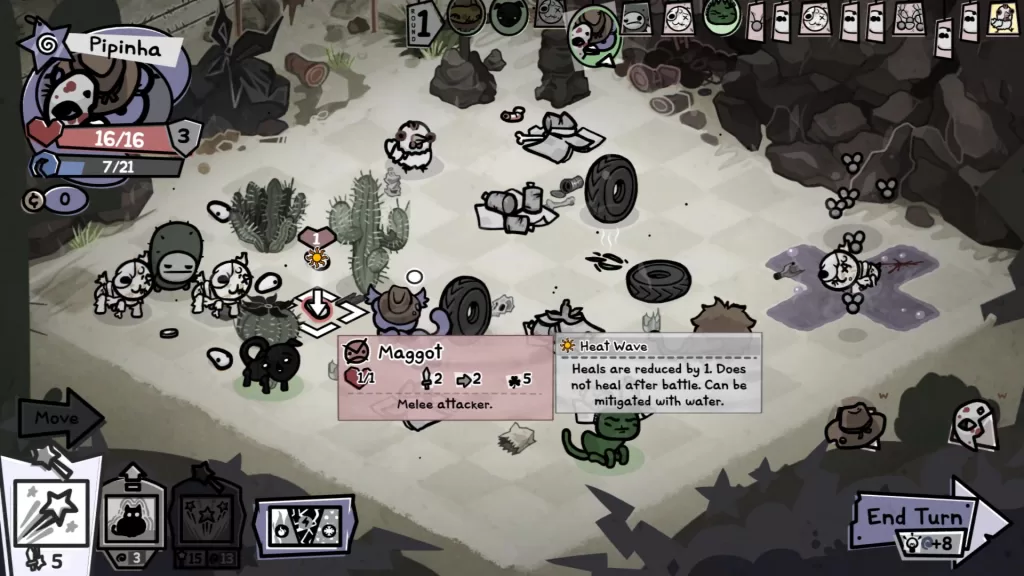
When not engulfed by faeces fiends, bosses are smart extensions of the environments they exist in and require thinking ahead, whether to coax or pin or suffocate. Some are infuriating, like one Solid Snake wannabe who just sits in bushes (increases his dodge chance, the bastard), then litters the board with steel traps (I hate him). Others like a cowboy cat shoot at “anything that moves”, so it becomes a tactical exercise in draining his moon clip and lining up your furry pieces well enough to capitalise on a turn where he’s unable to retaliate.
Progress far enough and you’ll encounter a story beat I don’t want to spoil, but know that it imposes a deadline, requiring you to form a superteam of retired cats. Not only is it a novel way of reusing your old pals, but it also charges subsequent runs with an urgency to mould the burliest pensioners possible before the ‘event’ arrives.
Wheeling out aged legends and smashing them together into an Avengers-esque ensemble is a wonderful feeling, too, made even better if you come out on top. Do so and you’ll get quest items, like a cube of gristle you’re tasked with transporting to a specific area. Think of these like challenge runs, where sticking these items in a cat’s inventory hits your whole party with parameters like “Cats permanently die upon getting downed” or “Cats don’t level up”. Again, they’re a well-thought-out way of treating masochists and transforming easier areas you’d beaten into riskier affairs.
Pursuing deep runs pre-release was a nightmare, though, as I found myself lurching from easy wins to barely making it out of starting zones. Since release, it’s stabilised, yet the agony and ecstasy I experienced in those early days gave me a valuable insight into the game’s psyche: it’s insecure. And it’s insecure because its roguelike and strategy selves are forever wrestling with each other.
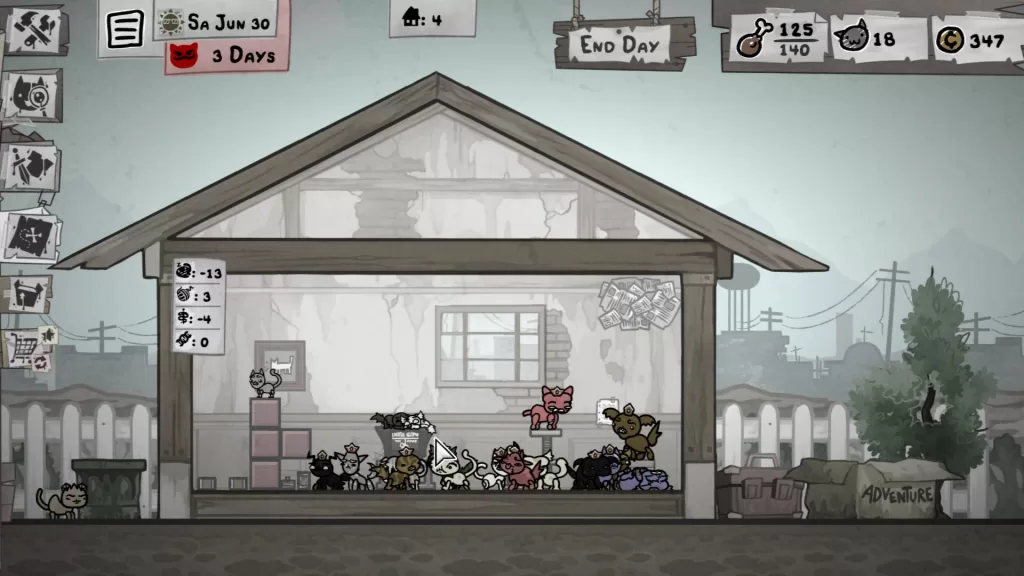
By its very roguelike nature, an hour-long escapade might come to an abrupt end as the reaper swings his scythe on a whim. And sure, demoralising runs feature heavily in other roguelikes, like Slay The Spire (STS) or Dead Cells. The difference lies, though, in how they handle loss. In STS, any disappointment in a failed run is offset by its transparent reward structure: you know precisely what you’ve earned and how it helps you advance. Fall into a cycle of despair in Mewgenics, and you’re to stare at a confusing mess of overlapping cat silhouettes, shrug your shoulders, and hope your next run works out better. How can it expect you to make progress if you don’t know how to make progress?
So as you struggle or, perhaps, grow into a player who wants to fine-tune your felines, you will almost certainly want to rattle the NPC’s gates. And yet, part of me totally understands why the breeding bible is kept in a vault. Roguelike runs must remain consistently surprising, and knowing how to game the slot machine risks hurting its replayability.
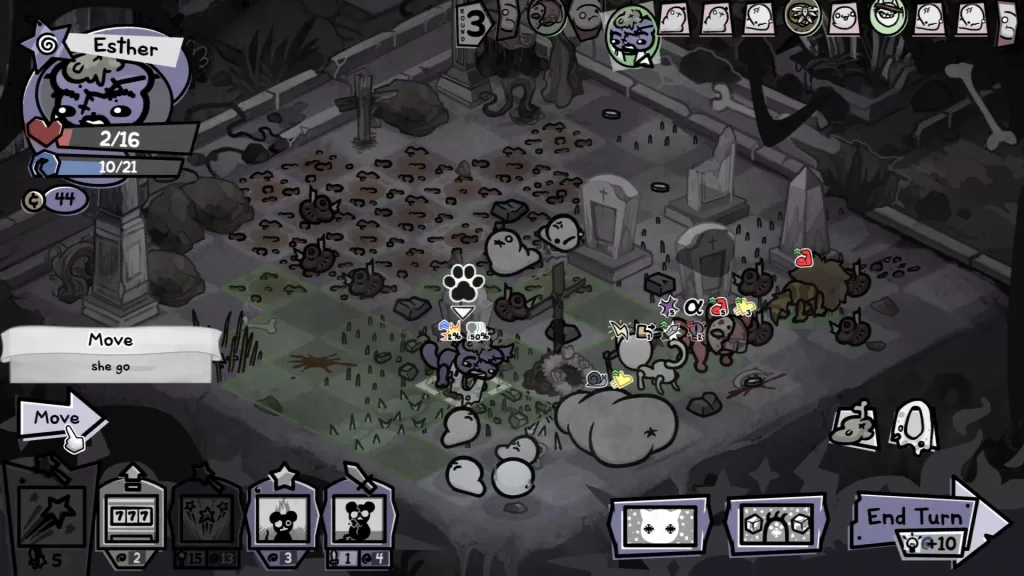
And so I wrestle with my emotions, too. As someone who wants to crack on, I can’t think of the last time I looked at my squads’ stats before I sent them off on a run, and it’s something I’ve grown to accept. Some classes are clearly better than others, but even if I pick a random jumble, I still find most runs are mine to lose. Powerful squads often snowball, and I know pretty quickly if the RNG gods have blessed me. On the flipside, difficult runs haven’t ever really resulted in a hard-fought slog to victory. If it’s going badly, the answer is to bow out early and throw more cats at the basket until you get lucky.
Don’t get me wrong, I really like Mewgenics. Despite gatekeeping its central theme, it’s easy to dive into a run and have a good time. You might unlock some stuff! You’ll jam to a funky beat! One of your cats might catch rabies and infect your squad with madness, so they turn on each other and ruin your evening! But its lack of granularity risks losing graduates who demand more from their clowder. So when your house is overflowing with cats, and there’s no need to uncover the min-maxing mystery, replayability relies on whether its broader strokes compel you enough to support it.
Comments: