
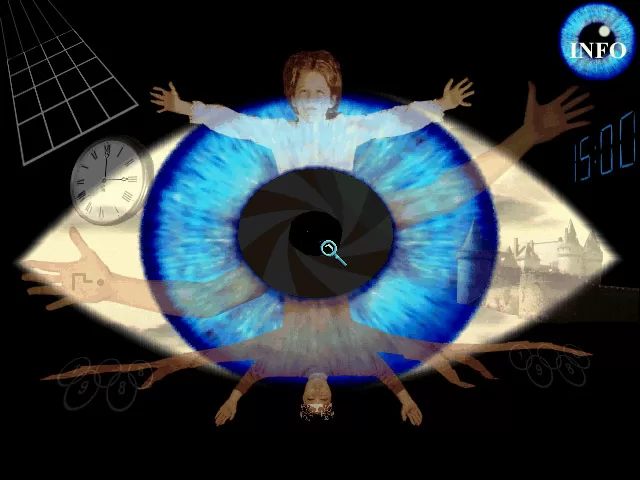
Well, we did it. After 99 in-game days equating to 144 real-world hours, my research suggests that FOTP Mick and I have seen everything there is to see in Blue Prince. I haven’t played a game with this kind of borderline obsessive dedication since my 18 month unbroken daily streak in Animal Crossing: New Horizons during the pandemic lockdowns.
But I don’t really want to talk about Blue Prince right now (in large part because I know for a fact I’m going to have plenty of opportunity to give it a proper post-mortem once we start our Game of the Year episodes in only like… two months, jeez). Instead, I want to take a trip down memory lane with a game called Blue Ice, which – even putting the coincidence of the similar titles entirely aside – I was increasingly reminded of during my time with Blue Prince.
A trippy, labyrinthine point-and-click puzzle adventure game, Blue Ice was first released in 1995, which happily means there are a few anniversary retrospectives knocking around, although I’m surprised that none of the ones I’ve seen for its recent 30th have made the Blue Prince connection.

Blue Ice centres on a young boy who has recently inherited the throne of the Kingdom of Icia after the death of his elderly father, “the mad king”. The old fellow clearly was mad, too, because he’s left his tweenage son to untangle a draconian system of laws both petty and spiteful that loom over the day-to-day lives of their subjects. Married women not being permitted to look at their own naked bodies because it constituted infringement upon the property rights of their husbands was the one that stuck with me even when playing this game as a little girl; and there are hundreds of others that are equally unhinged.
To further complicate matters, upon the old king’s death, time in Icia is forced to stop: its citizens may continue to grow old, but are doomed to never experience change unless young Prince Edward can memorise every law that governs them before he comes of age.
The parallels between the characters and basic premises of both games are pretty apparent, even if the actual gameplay and plot in both cases diverges significantly after those similar set-ups. But even that’s not all they have in common, because famously – or perhaps infamously – Blue Ice doesn’t actually have an ending. It just kind of… stops, at a certain point, without resolving any of its major plot threads, or even having the courtesy to indicate to the player that it’s over. Eventually there’s just nowhere else to go.
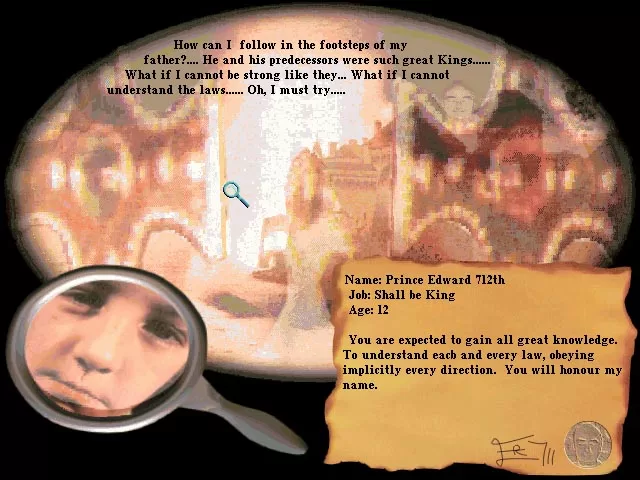
Conventional wisdom among retro gaming buffs attributes this to Blue Ice being just the first step of a much bigger ARG planned by the devs that never got off the ground; but how much can actually be attributed to the development team simply running out of time and budget, or the whole thing just being a bit of flimflam, is absolutely unknown at this point.
Blue Prince isn’t that egregious, not by a long shot, but it’s still a game that very much ends whenever you decide to stop playing. While you can absolutely keep going after either credits roll, there is no ultimate reward for seeing everything that constitutes the “true” ending. And while there’s a lot of deep-level lore to dig up, there’s nothing so pedestrian as the game giving you feedback to indicate that you are, actually, done. At least for now.
Because one big difference is that in 1995, there was no hope of Art of Mind Productions releasing a patch that wrapped up some loose ends and added back in any planned content that wasn’t quite ready for launch. Whereas Dogubomb apparently isn’t quite done with Blue Prince yet, even six months after a launch that was – happily – the prelude to more success than the minor curio of video game history that is Blue Ice’s only major legacy.
Comments: