
I firmly believe Before Your Eyes, a story-centric game where you shift time forwards with your real-life blinks, is important. It’s a celebration of games as powerful journeys for everyone: your nan, your barber, that intimidating kid who cycles around your estate in all-black and a balaclava but actually smells of Lenor.
And so I had high hopes for Goodnight Universe, what with developers Nice Dream extending their webcam wizardry to a story about a psychic baby. But it’s sadly less of an evolution and more of traditional step forward that turns blinking from phwoar into bore.
*From here on out I’ll do my utmost to avoid spoilers, but I may give a few little details away.
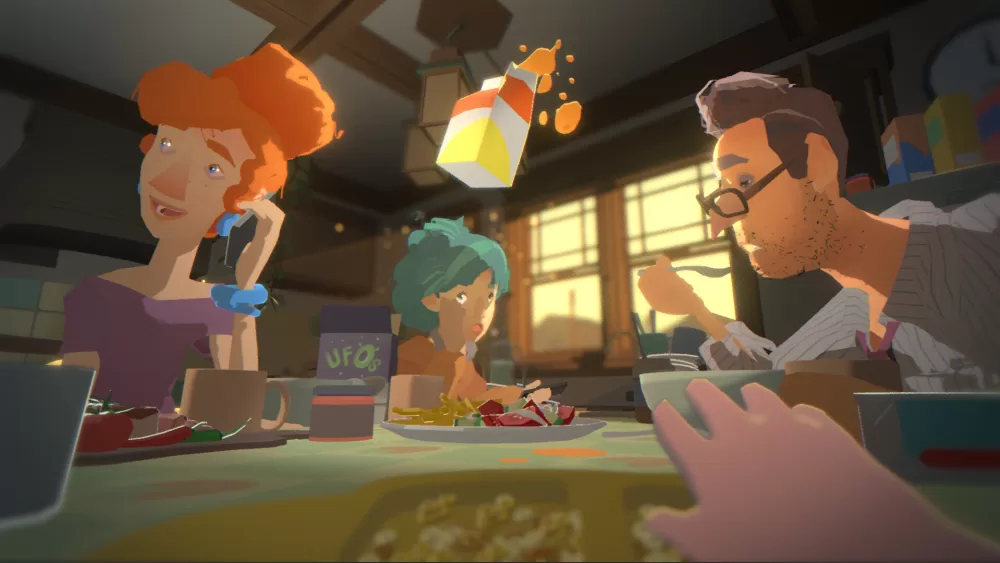
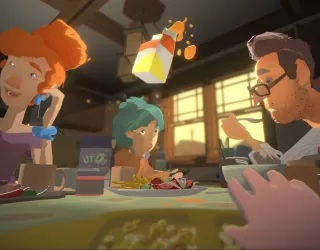
You play as Isaac, a baby raised by a typical American telly family who hit all the archetypes: neurotic father who is grating, grounded mum who is consistently annoyed by neurotic husband, super intelligent older sister who puts up with them both and is quite nice. What’s atypical, though, is the voice in your head. It’s not Isaac, but someone wrestling with the baby form they’ve seemingly adopted and who struggles to balance both Isaac’s goo goo ga ga and their own grown-up-ness.
And so begins a tale that escalates as Isaac and his adult consciousness try – and fail – to hide their psychic powers, both from their family and from a secretive tech corporation. It’s one of (literal and spiritual) growth and speaks to an understanding that perhaps we could all benefit from childish innocence and not ignorance. That shedding preconceptions and greeting encounters with adolescent wonder can lead us to nurture truly meaningful relationships we may have ruled out otherwise.
For the most part it’s a story that can surprise and hit some emotional peaks, though it does feel a bit disjointed and a bit plodding at times. And I think that’s by virtue of how you control baby Isaac and ultimately, take control of the narrative.
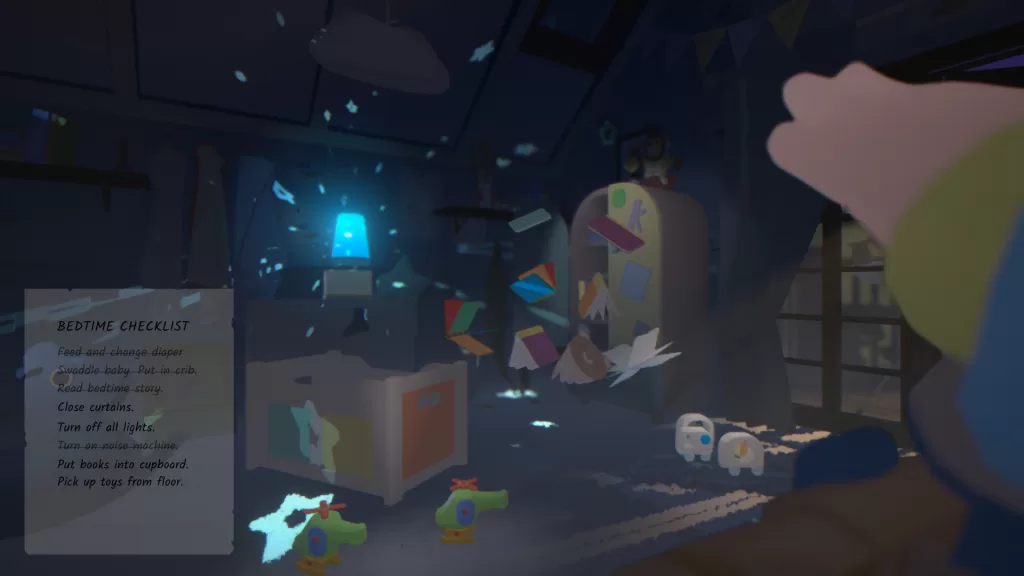
Early on you’re given a checklist to tick off in the kitchen while your parents are out, both to push the story along but also to acclimatise you to your newfound psychic powers. You blink to jolt light switches. You hold and swipe your mouse to close shelf doors. You close your eyes to hear the tinkle of plates rearranging themselves, then open them as a satisfying clink states that they’re ready to be swiped into a cupboard. Little do you know that this is, largely, the template for future psychic stints. Plant yourself in a spot, scan the environment, tick off a series of swipes and blinks.
There might be times when swipes and blinks are on-rails or a bit puzzley. Soft story choices might be made with a smile or a frown, which sees Isaac giggle with glee or erupt in a flood of tears. Later, as more story things happen, you spend some time away from your family and snoop on their situation by closing your eyes and turning your head to tune into their frequency. You can’t knock Nice Dream’s smarts here, in smoothly coupling your physical movements to those happening on screen. But as the story progresses, the frequency of the swipes, blinks, and head turns starts to feel very samey.
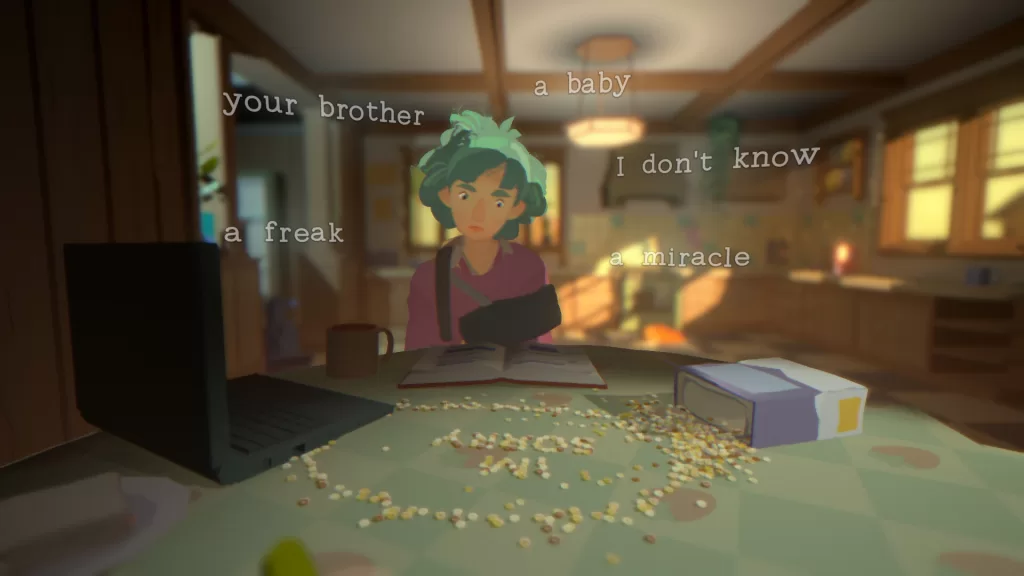
Isaac’s crashing out again is he? Going to “Show them who’s boss” is he? Guess you’ll sit rooted in the spot and destroy some stuff with swipes and blinks. Need to know how the family’s doing again do we? Guess you’ll have to close your eyes, find the frequency, and listen to their average chatter. Yes, there are some touching moments and wonderfully presented interactions to represent, say, discovering journal entries or disconnection (sorry, I have to keep this SO vague), they just don’t coalesce into a transportative physical union between you and Isaac. You might be a psychic baby in a story replete with solid revelations, but they can’t distract from the truth: you – the player – are an unkempt human with a dodgy back, and you are playing a video game that’s made your little Logitech webcam unreasonably warm.
Before Your Eyes’ may have had a limited set of webcam tricks, ie. a bit of blinking and moving your mouse about. But those blinks! Time literally hinged on your eyelids shuttering for a split second. Sure, you couldn’t necessarily ‘control’ what was in those scenes or the outcome of the story itself, but time was in a constant tussle with your own body. Sometimes you’d want nothing more than to spend an extra few seconds soaking in an afternoon drive with the family, and all the while, you’d be fighting the urge to give your eyeballs a swipe of moisture. In a sense, you felt like a cursed Greek god, if Greek gods had itchy eyes and communed via Zoom.
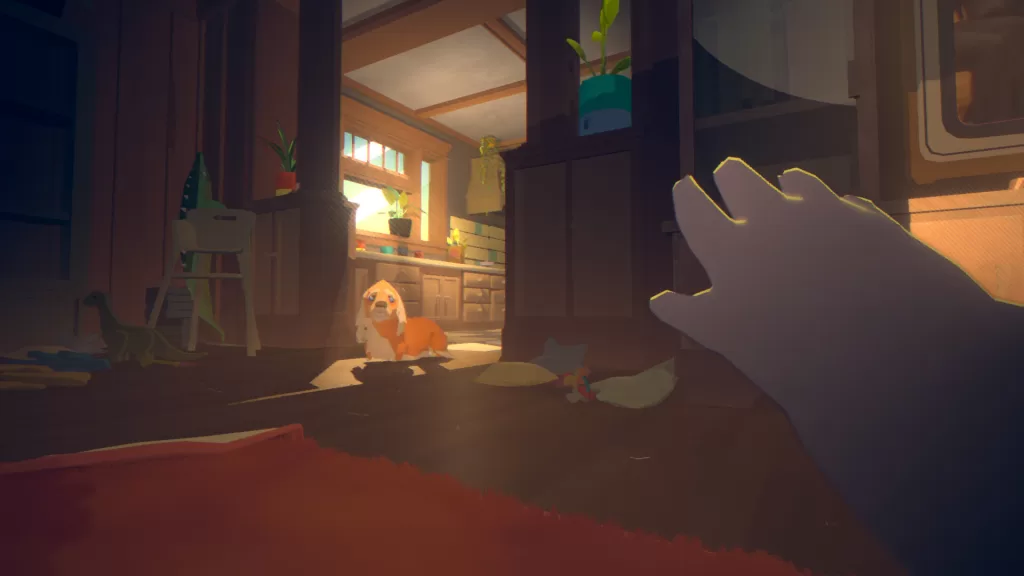
That’s not to say Goodnight Universe isn’t impactful, it’s just pushed your actions behind the webcam into a perfectly safe way to control the narrative. While there are some big decisions to make that – I am presuming this and won’t be going through it all again, I’m sorry – change the course of the ending, you’re still left feeling a bit more of a human director than an extension of Isaac’s psyche that’s been swept up in something.
And as that story wraps around on itself in a ‘reunion arc’, you might realise you haven’t truly shaped a meaningful connection with your family. For most of the lengthy three chapters (the game took me about 4 hours to complete), you’re doing your own thing and listening in on them from a distance. So when that ‘reunion’ lands you’re a bit like, “It was cool getting to know you like you were D-List celebs and I’d wiretapped your phones for The Sun, I guess?”.
It might not read like it, but I admire Nice Dream, I really do. Goodnight Universe is proof of their ambition to push interactive storytelling through fun and new webcam tricks, alongside great voice acting, illustration and artsy moments. Sadly, though, I think it succumbs to being a second game: it’s far longer than Before Your Eyes, and it’s more in almost every sense. But in doing so, I think it’s morphed from what could’ve been a succinct, utterly transportive experience that wrings your tear ducts for 90 minutes, into a story that’s told through fun gimmicks. Yeah, it is a good video game, I guess.
Comments: